The Challenge
Business goal: Translate a complex, clinician-led intervention program into a digital format that could be accessed anonymously, without losing its therapeutic value.
User problem: Encourage a highly stigmatised audience to actually engage with the tool — making it accessible to people at any stage of recovery, while also finding a way to involve family and friends in a supportive way, without creating conflict.
Why it was hard: The subject matter carried significant stigma and sensitivity — addiction, mental health, and family conflict are difficult territory to design for. The project also needed to incorporate content and insight from a related agency, the Queensland Mental Health Commission (QMHC), adding another layer of stakeholder alignment to manage.
Fig. A: Crystallized Carbonite of Lime
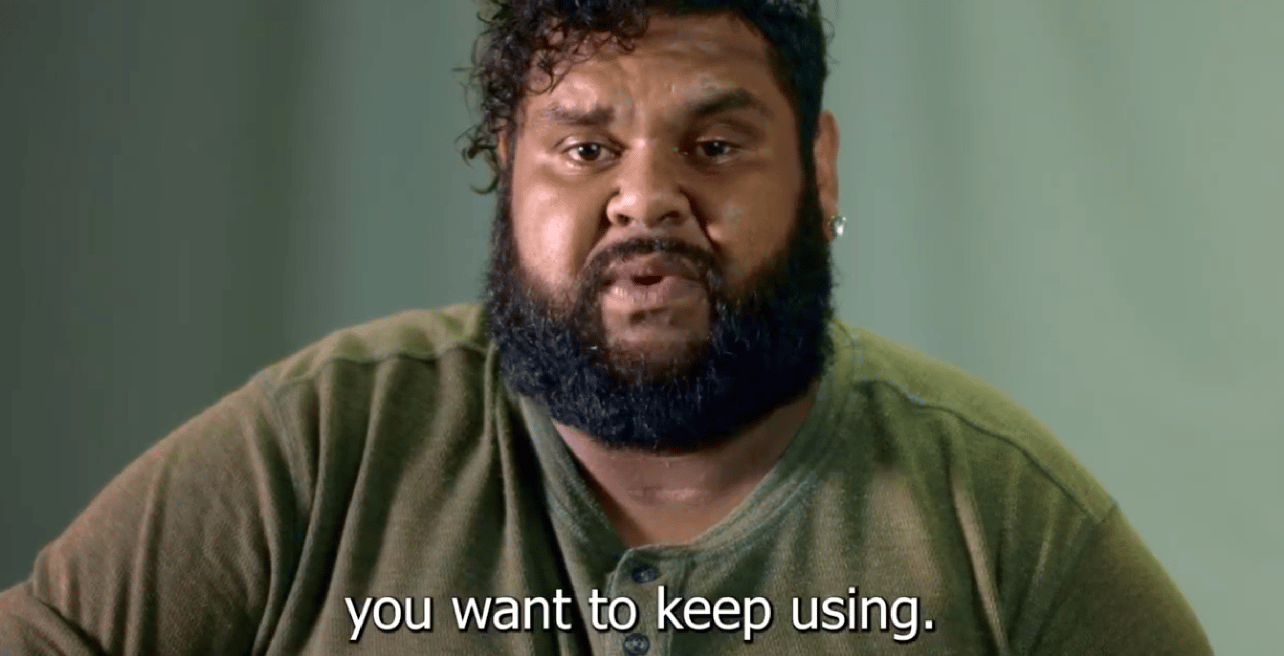
Fig. Interviews with First Nations people
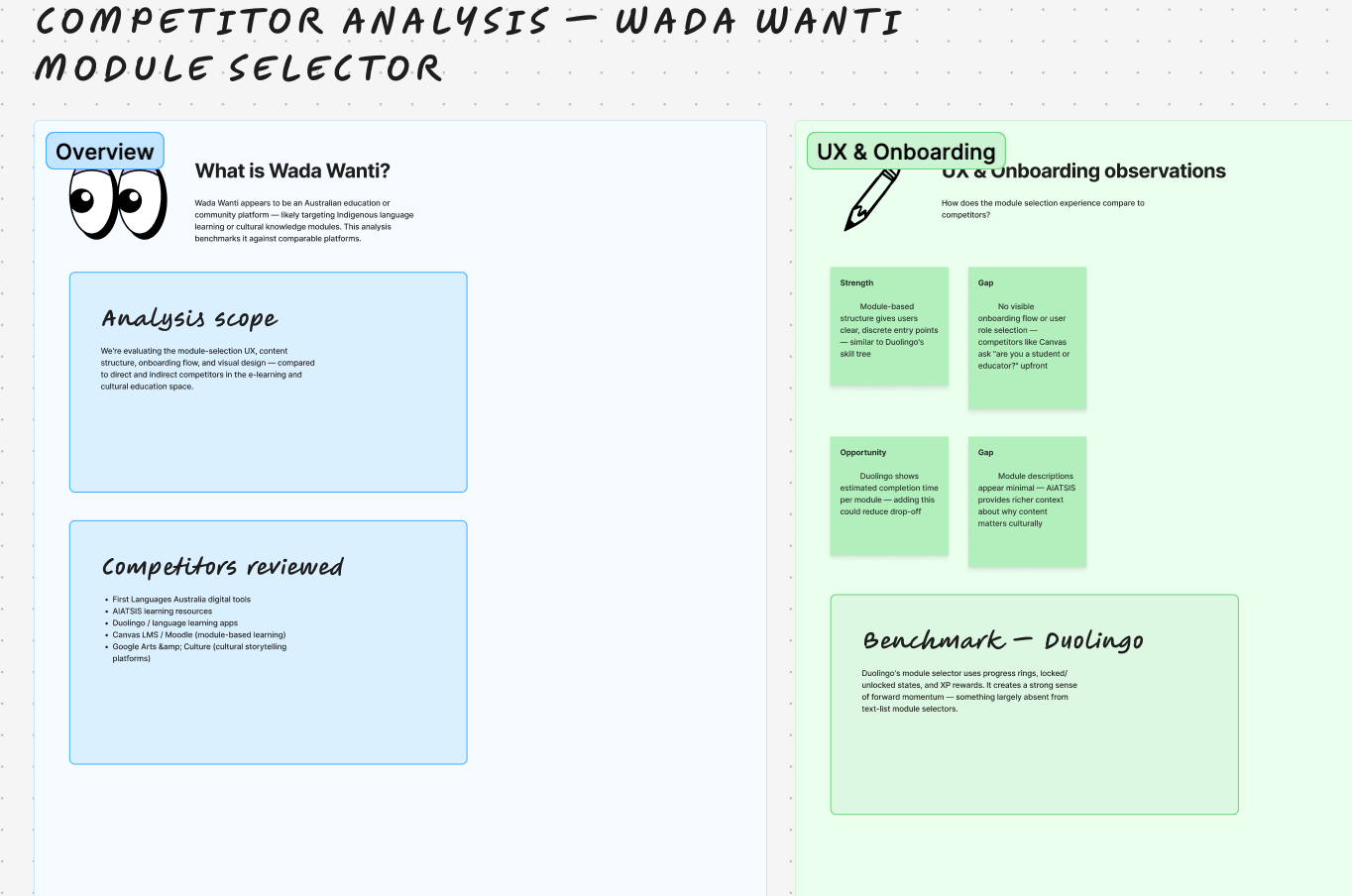
Fig. Screen grab of comp analysis.
Research & Discovery
Methods: SME interviews with counsellors, interviews with people with lived experience (family and friends of people using the service), and an extensive review of existing counselling programs.
Key findings:
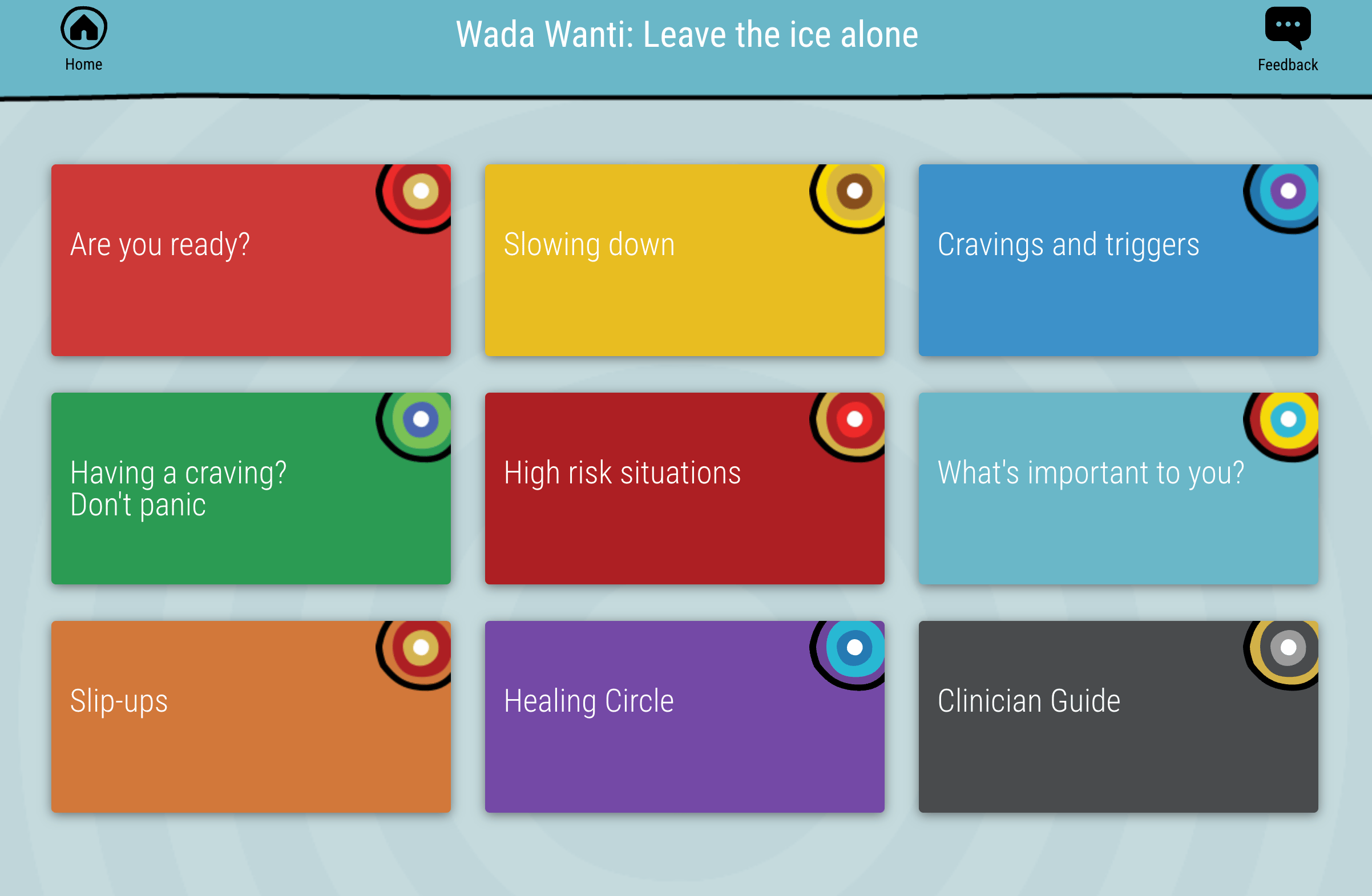
Competitive/comparative analysis: Reviewed existing digital intervention tools in the same space, including Wada Wanti — a free, private web-app supporting Aboriginal and Torres Strait Islander people to reduce or stop methamphetamine use, developed with input from Aboriginal and Torres Strait Islander people with lived experience. This was a useful comparison point for how a culturally-grounded, low-barrier, self-directed intervention tool can be designed for a similarly stigmatised and hard-to-reach audience.
Synthesising the discovery sessions, SME interviews and existing counsellor programs, I developed a content plan that defined the tool's guiding principles and mapped its content structure and intended learning outcomes.
- Principles:Support available anytime, anywhere
- Provide choice and encourage agency
- Prioritise active, interactive and applied learning
- Offer bite-sized content

Ideation
Guided by these principles, I reorganised the client's existing counselling program into a clearer structure the audience could navigate and engage with more easily — designed to support ease of navigation, a sense of choice, and content broken into digestible pieces to help participants process, understand and retain information.
The structure covered:
- Stages of change
- Support strategies for each stage
- The importance of choice
- Managing expectations of change
- Fluctuating motivation
- Where to seek help
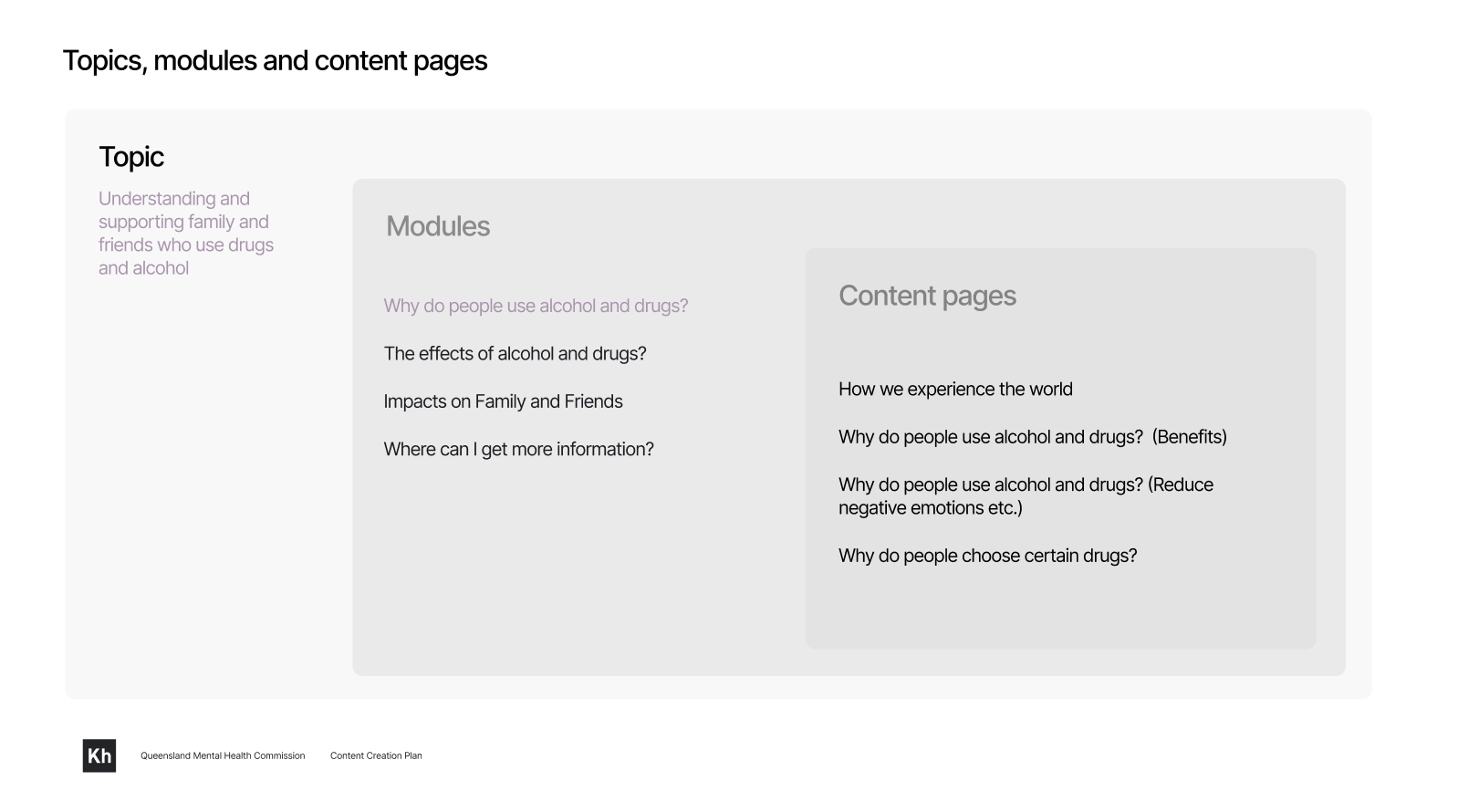
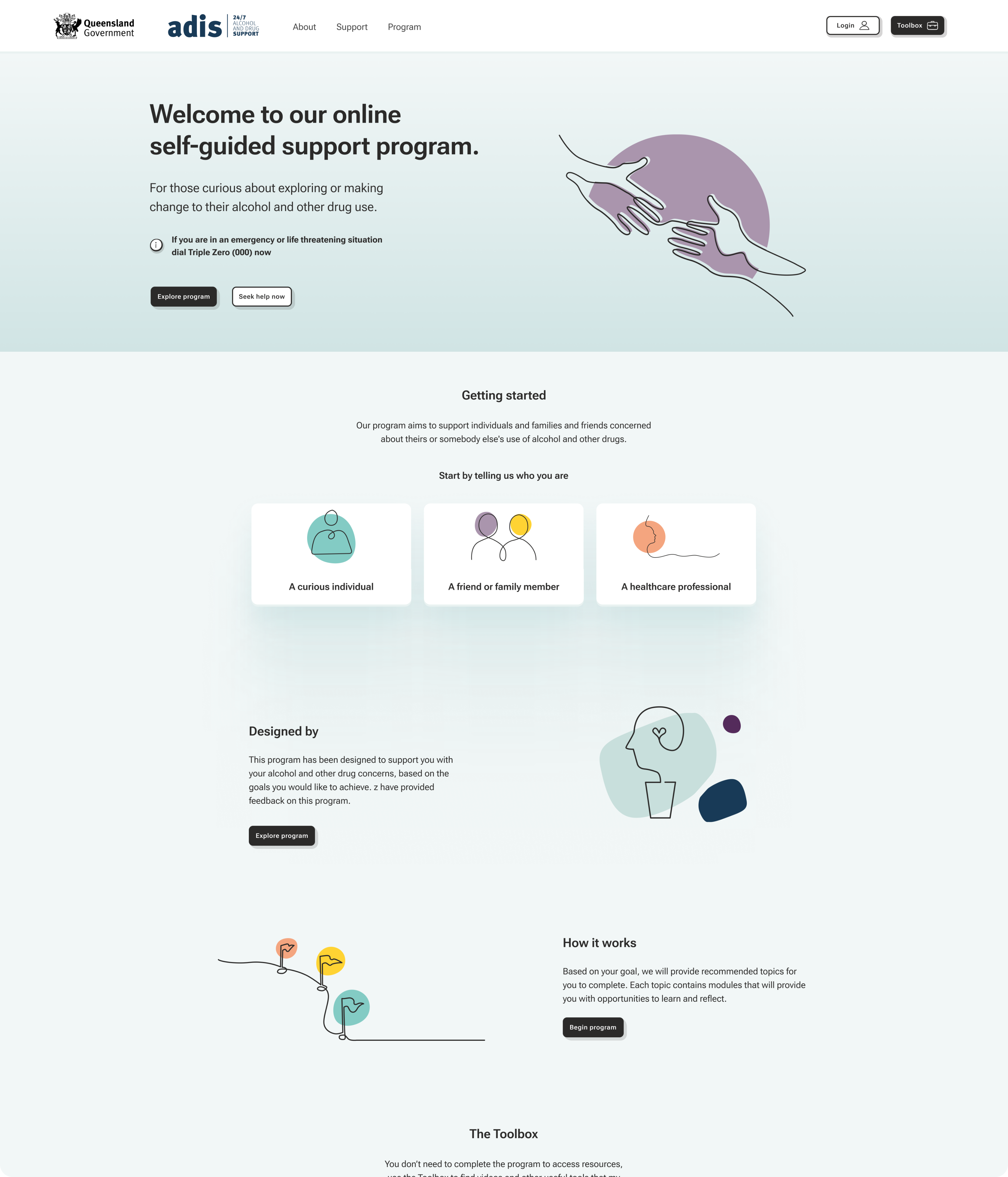
Fig. B: Screen capture from a client presentation I did for my content plan.

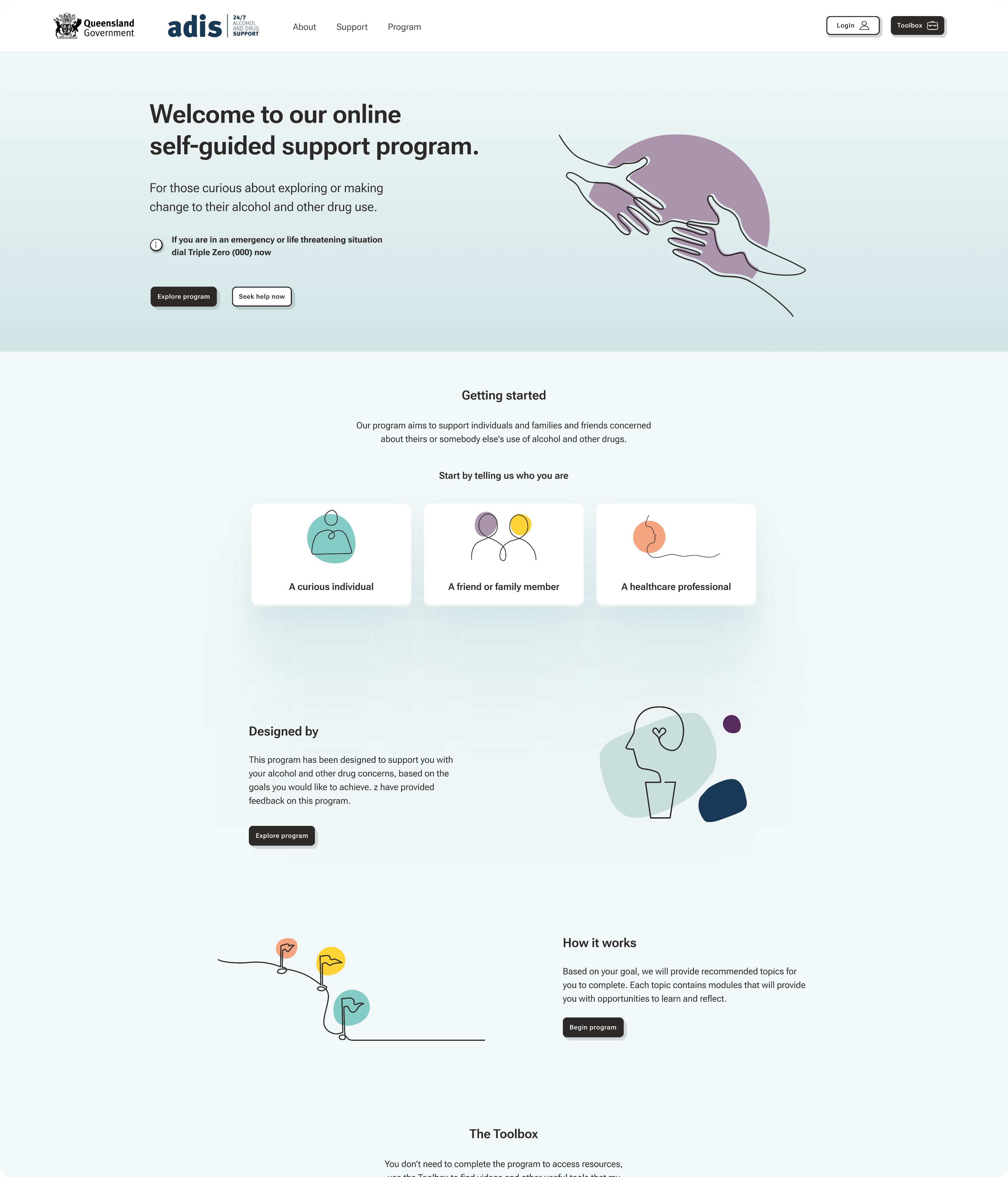
Desktop
Mobile
Testing & Validation
Once designs were approved and the tool moved into build, I developed a consultation plan to validate the approach with real audiences before launch — including people with lived and living experience, and people from Aboriginal and Torres Strait Islander and culturally and linguistically diverse backgrounds.
Consultation goals:
- Validate assumptions and learn more about audience needs
- Understand whether the planned topics were useful and desirable
- Test content for comprehension, effectiveness and engagement
- Uncover insights into language, messaging and cultural sensitivities
- Test the usability and accessibility of the design
The plan also included QA testing and content review to confirm the product worked as intended, both technically and functionally, alongside a final content review with internal stakeholders and relevant SMEs.

Since launch, ADIS counsellors have used the tool in a range of ways during planned sessions with participants, and as a lower-barrier entry point for harder-to-reach audiences, who can engage with it anonymously and begin their own journey without the stigma or commitment of an in-person session.
Reflection::
Knowing what I know now about this audience — and having heard directly, through lived experience, how hard it is to make even the smallest change — I'd break the content down further. Even a small step is a significant achievement in this context, so with more time I'd make the program smaller and phase it out over time with more achievable milestones, rather than trying to fit the entirety of the existing counselling programs into one tool. At the time, fitting in most of the existing program content was the necessary trade-off; with hindsight, I wouldn't try to fully replace face-to-face programs, but instead design the tool as a smaller, more focused complement to them.
Simplifying a complex customer experience across multiple business units.
Lendlease: Customer Experience Blueprint
Previous


Digital Customer
Experience Blueprint
The free, play-based health and wellbeing program that helps kids eat, sleep and move better in the real world.
Health & Wellbeing QLD: Podsquadn
Next